How-to Tutorials
Showing posts with label cook. Show all posts

The Difference Between A Vegan And Vegetarian Diet


The science cannot be contested. A diet rich in plant-based foods is extremely beneficial to your health. In contrast to a vegan or vegetarian diet, what exactly is a plant-based diet? Should we stop eating meat and dairy products?

Fruit and vegetables laid out on a table with blueberries in a heart shape

‘Eat food, not too much, mostly plants’ – Michael Pollen

What is a plant-based diet?

A plant-based diet is a manner of eating where the emphasis is on putting as much plant food on your plate as possible.

Plant-based food examples include:

  • Vegetables
  • Fruit
  • Legumes (like lentils and chickpeas)
  • Whole grains
  • Nuts
  • Seeds.

The more of these items you put on your plate and the more closely these foods match how they are found in nature (i.e., the less processing), the better for your body they will be.

Being restrictive is not the point of this eating style. Those who consume a diet high in plants may nevertheless opt to consume small amounts of dairy, fish, poultry, and other animal products (also known as semi-vegetarian, flexitarian or pescatarian). It's wonderful that there is no "one size fits all" method.

What’s the difference between a vegan and vegetarian diet?

For a variety of reasons, some vegans and vegetarians opt not to consume meat and other animal products. A vegetarian diet forgoes meat, poultry, fish, and seafood, while a vegan diet forgoes all meat and animal products (including dairy, eggs, fish, and seafood). There are a few vegetarian diet variations, though, depending on whether you consume or abstain from eggs, dairy, and seafood (see table below).

Different styles of plant-based eating

Name of dietDescription
Semi-vegetarian or flexitarian 

includes eggs and dairy

may include small amounts of meat, poultry, fish and seafood

Pescatarian

includes eggs, dairy, fish and seafood

excludes meat and poultry

Ovo-vegetarian

includes eggs

excludes meat, poultry, fish, seafood and dairy
Lacto-vegetarian

includes dairy

excludes meat, poultry, fish, seafood and eggs

Vegetarian

(a.k.a. lacto-ovo vegetarian)

includes eggs and dairy

excludes meat, poultry, fish and seafood

Vegan

excludes all meat, poultry, fish, seafood, eggs and dairy 

What are the benefits of a plant-based diet?

Your risk of heart disease is reduced, and your general health is improved, by eating a diet high in whole, minimally processed plant foods.

In addition to being high in fiber and low in saturated fat, fruits, vegetables, legumes, whole grains, nuts, and seeds also include heart-healthy fats. They provide our bodies with nutrients including vitamins, minerals, antioxidants, and phytochemicals that can stave off disease.

Vegetarian and vegan diets are clearly linked to a lower risk of heart disease, according to research on dietary trends. Blood pressure and Low Density Lipoprotein (LDL) cholesterol are often lower in vegans and vegetarians compared to non-vegetarians. According to several research, a well-planned vegan and vegetarian diet can help people maintain their blood sugar levels and may even lessen body inflammation.

The most important finding from the evidence is that vegetarians and vegans generally have better lives, which somewhat (but not entirely) explains the lower risk observed in these populations. People who eat vegetarianism, for instance, might be more physically active and drink less alcohol.

Should I switch to a vegan diet?

You don't have to switch to a vegan or vegetarian diet in order to eat more plant-based meals. For many of us, simply making an effort to consume more plant-based meals and fewer processed foods each day will have a huge positive impact on your health and heart disease risk.

Regardless of whether meat or dairy is consumed, a high intake of fruits and vegetables is linked to a lower risk of heart disease and early death.

There are many different eating habits that encourage a long and healthy life and involve differing amounts of meat and dairy. The traditional Mediterranean cuisine, the vegetarianism of Seventh-Day Adventists, and the predominately plant-based diet of the Okinawans in Japan are a few well-known examples from the "Blue Zones." All of these populations have one thing in common: they eat mainly plant-based foods.

How can I eat more plant-based foods?

Consider a strategy that is realistic for you and your family as a good place to start. Take into account making gradual changes to include more plant-based items on your plate.

Here are some dish suggestions for vegetables and legumes to get you started.

Is a plant-based diet healthy?

Not all plant-based diets are healthful. Soft beverages, hot chips, and biscuits are all examples of vegan and vegetarian cuisine. Any excess of saturated fat, sugar, or salt is bad for your health. From vegan sweet treats to vegetarian hotdogs, processed plant meals are becoming more and more prevalent on store shelves. Some of these items can actually have more salt and sugar content than typical foods.

Whether or not they are made of plants, highly processed meals should always be consumed with awareness. Learn to read food labels so you can make the best decisions possible when buying things.

Nutrients for vegan and vegetarian diets

If you decide to follow a vegan or vegetarian diet, keep in mind that, particularly for pregnant or breast-feeding women, infants, and young children, getting all the vital nutrients you require may require careful preparation. Alternative supplies of omega-3 fatty acids, iron, zinc, and calcium may be required, as well as protein (such as tofu, tempeh, legumes, nuts, and seeds). If you are cutting off all animal products, you should also think about taking vitamin B12. Supplements or fortified foods may be required (particularly for B12).

Talk to your doctor or practice nurse if you're considering being vegetarian or vegan, and seek assistance from a dietitian or licensed nutritionist as well.

What does the Heart Foundation recommend?

There are many ways to eat for a healthy heart, and a variety of diets, including those with and without dairy, small amounts of meat, chicken, fish, and other animal products, can be heart-friendly.

No matter which diet you opt for, we advise making plant foods the star of your meals and snacks by piling them high on your plate, including fruits, vegetables, whole grains, legumes, nuts, and seeds.

The quality of your diet overall and mastering the principles of eating a healthy diet are what matter most. With the exception of a few, most of us would benefit by eating more plant-based foods and fewer processed foods. For many of us, adopting a plant-based diet may be most realistic and sustainable when using a "flexitarian" approach.
How to Bake Meatballs in The Oven


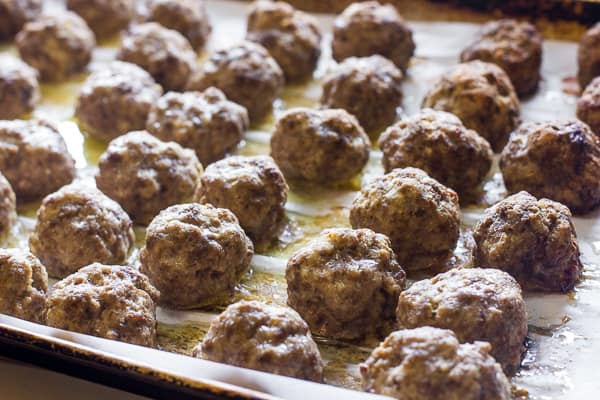
By far, cooking meatballs in the oven is the simplest method available. Not only is it possible to cook a large number of things at once, but you can also make sure that each meatball is cooked uniformly. Additionally, it is convenient that the meatballs do not need to be constantly turned over in the skillet. Instead, you can prepare other components of the dinner while they bake in the oven.

Although cooking meatballs in a skillet is a perfectly acceptable method, after I discovered how to bake them in the oven, I never went back to the way I used to do it.

Baking meatballs in the oven is the simplest method of cooking them. A straightforward meatball recipe that can be used for Swedish meatballs, spaghetti sauce, honey garlic sauce, and more!
Prep Time: 15 minutes
Cook Time: 20 minutes
Total Time: 39 minutes
Servings: 28 meatballs

Ingredients

  • 2 pounds ground beef
  • 1/2 cup parmesan cheese
  • 1/3 cup milk
  • 2 eggs
  • 3/4 cup bread crumbs
  • 1 tsp salt
  • 1/2 tsp black pepper
  • 1/2 tsp garlic powder

Cooking meatballs has never been easier than baking them in the oven. A simple recipe for meatballs that can be used in spaghetti sauce, with honey garlic sauce, for swedish meatballs and more!

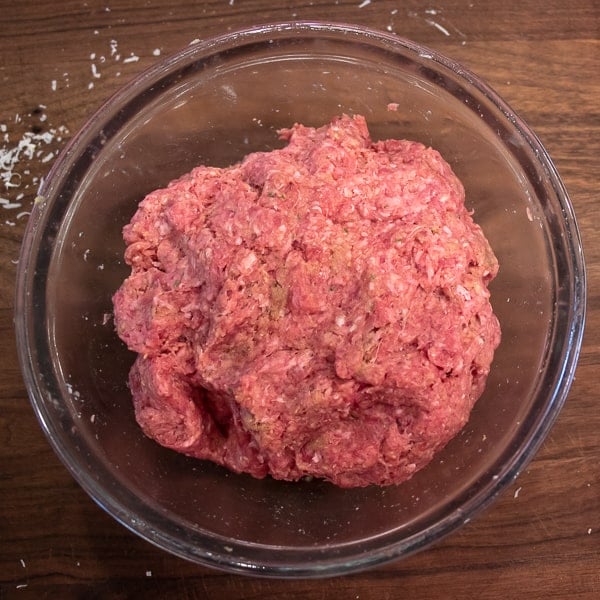
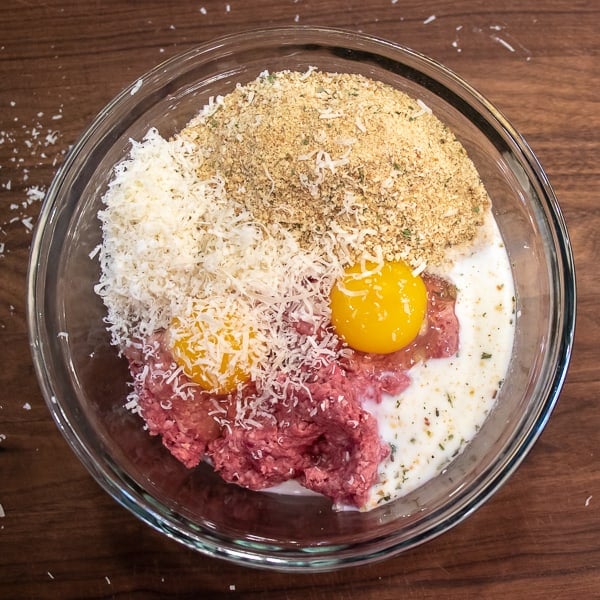
1. In a bowl, combine all the ingredients.

Cooking meatballs has never been easier than baking them in the oven. A simple recipe for meatballs that can be used in spaghetti sauce, with honey garlic sauce, for swedish meatballs and more!

2. Knead the meat mixture to ensure that everything is thoroughly combined.

Cooking meatballs has never been easier than baking them in the oven. A simple recipe for meatballs that can be used in spaghetti sauce, with honey garlic sauce, for swedish meatballs and more!

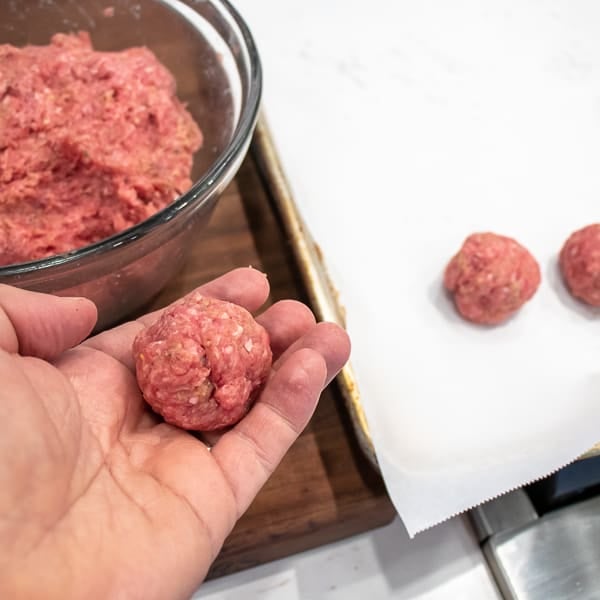
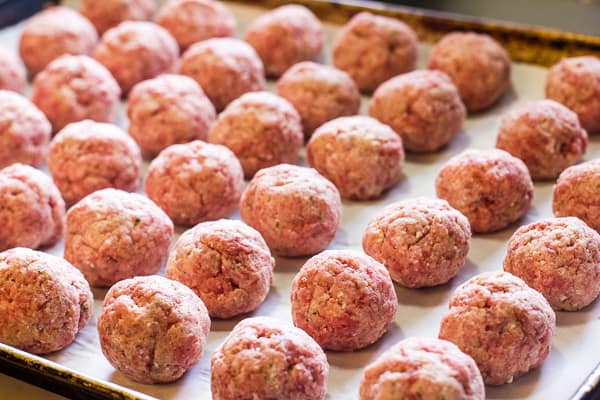
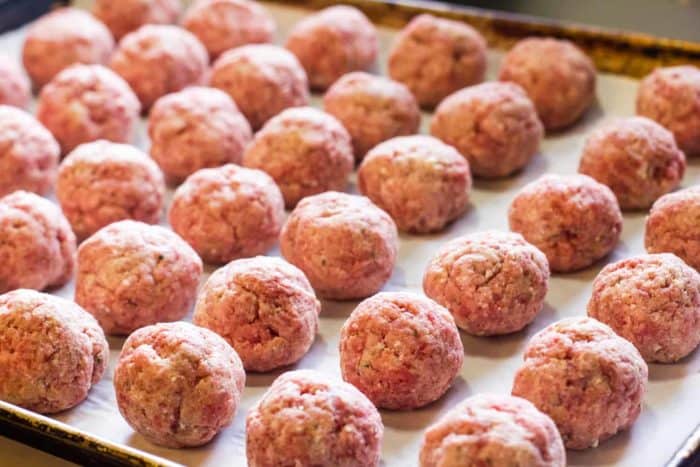
3. Place the meatballs, which should be about 1 1/2 inches in diameter, on a baking sheet that has been lined with parchment paper. The meatballs won't adhere to the baking pan thanks to parchment paper, which also makes cleanup simpler.

Oven baked meatball recipe

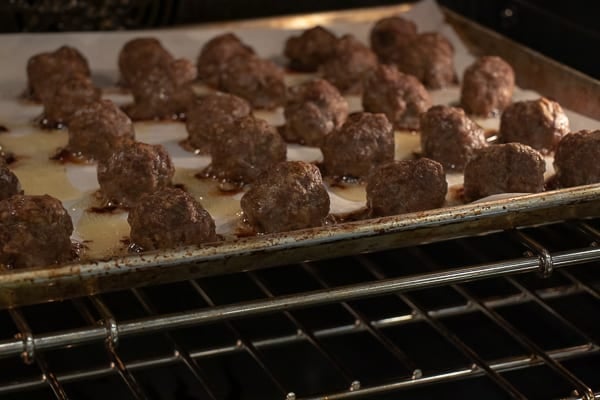
4. Cook for 20 to 24 minutes at 400°F in the oven, or until well heated. All of the meatballs should have an exterior that is evenly cooked and well browned.

Cooking meatballs has never been easier than baking them in the oven. A simple recipe for meatballs that can be used in spaghetti sauce, with honey garlic sauce, for swedish meatballs and more!

5. Once prepared, they can be tossed with honey garlic sauce and served as an appetizer or added to spaghetti sauce and topped with noodles. These are also delicious in a meatball sub with marinara and mozzarella cheese, in my opinion.

Oven baked meatball recipe

We adore meatballs and use them into numerous recipes. Almost every recipe that calls for cooked meatballs works just as well when the meatballs are baked in the oven. They can be included in the dish after baking.

Easy Kid Lunches For Summer


With this filling summer lunch recipes that are bursting with healthy vegetables, you can keep your kids going all day. No of the weather, you can enjoy more time with your family by spending less time in the kitchen and more time outside!

Roast tomato soup with pasta

Roast tomato and orzo pasta soup topped with pesto and Parmesan shavings

Make this colorful tomato soup, which is loaded with vegetables and has orzo pasta for additional texture, for a healthy family dinner. Pour the soup into a flask and top with a sprinkle of parmesan or a spray of pesto to make a packed lunch. Breadsticks should be provided on the side.

Rice & quinoa prawn sushi bowl

Rice, prawn, avocado and cucumber sushi bowl with chopsticks

With our fresh family sushi bowl inspired by Japanese cuisine, take your palate to the Far East. This nutritious recipe offers quinoa as a source of protein, sweet potatoes as a slow-release carbohydrate, and avocado as a source of healthy fats. The components can also be placed right into bowls or lunchboxes with lids for the following day.

Cod & pea fritters

Three cod and pea fritters

These cod and pea fritters are a wonderful way to utilize leftovers since they are crisp on the exterior and soft in the interior. With tomatoes and rocket, serve this straightforward family meal, or put it in a lunchbox once it has cooled.

Sticky pork lettuce wraps

Assembling lettuce pork wraps with ingredients from pots

Make these simple lettuce and pork wraps for a refreshing summer meal. Prior to cooking, marinate the pork steaks in a delectable mixture of honey, soy sauce, and spices. Following that, kids can put together their own wraps using the pork, carrot, and cucumber matchsticks. Pack them join-side down if you're making them for a school lunch to prevent them from opening.

Chicken & sweetcorn ramen

Bowl of ramen with eggs, sliced chicken and sweetcorn

For a light summer lunch, prepare these simple pork and lettuce wraps. Prepare the pork steaks in advance by marinating them in a delectable mixture of honey, soy sauce, and spices. Then, using the pork, carrot, and cucumber matchsticks, kids may create their own wraps. Pack them join-side down if you're preparing them for a school lunch so they don't open.

Egg & cress club sandwiches

Two skewers with triple layered egg and cress sandwiches

Instead of settling for a basic two-layered club sandwich, try this triple-decker toasted club sandwich. These delicate egg and cress sandwiches are held together by skewers so they don't disintegrate throughout the trip, making them ideal for a summertime family picnic.


How Long to Cook Chicken Breast in Oven


To learn how long to cook chicken breast in the oven, you must understand a few important tips: Searing is a good practice before baking, using an instant-read thermometer, and re-heating baked chicken. This article will answer all of these questions and many more. You'll also learn how to roast a chicken breast before serving it. So, sit back and enjoy! And don't forget to share this article with your family and friends.

Searing chicken breasts before baking

Searing chicken breasts before baking can produce some of the best results. You can use a different pan on the stovetop or a preheated oven to cook the chicken. Medium-seared chicken breasts take 15 minutes to bake, while larger, thicker breasts will take longer (up to 30 minutes), and smaller pieces will take about 10 minutes. Cooking time estimates are meant as a guide only, so be sure to check the meat's internal temperature. A chicken is done when it has reached an internal temperature of 165 degrees.

Searing the chicken gives it a golden exterior and evenly cooks the meat. To sear chicken, you need a heavy-bottomed oven-safe pan that retains heat. To prepare the pan, use a thin layer of oil and heat it over a medium-high heat. Add the chicken, skin side down. Be sure that the chicken is not too crowded. Continue cooking until the chicken breasts reach an internal temperature of 165 to 175 degrees F.

Baking chicken at 400F

If you're looking for a quick and easy weeknight meal, baked chicken breast can be the perfect solution. This dish is high in protein, but low in fat, making it a healthy and nutritious choice. When baked properly, it's moist and flavorful, and can be served with your choice of sides. Here's how to determine the perfect cooking time for chicken breast. And make sure to check the internal temperature!

The cooking time for chicken breast varies depending on the thickness and desired level of doneness. A typical 1-inch-thick breast will take about 20 minutes at 400F. Check the breasts frequently to avoid overcooking them. Once the breasts are cooked through, they will turn a golden brown color. If you're concerned that your chicken breast is too dry or overcooked, you can always cook it a few more minutes.

Using an instant read thermometer

Using an instant read thermometer to cook a chicken breast in oven is an excellent way to check for doneness. These inexpensive thermometers can give you a temperature reading almost instantly without letting the chicken cool during the cooking process. You can purchase one for less than the cost of a chicken breast. The thermometer should be inserted into the thickest part of the meat, away from the bone. After the chicken has been removed from the oven, push the thermometer slightly into the chicken to give you a reading.

To check the internal temperature of your chicken breast, insert a ChefAlarm probe into the center of the breast. Then set the thermometer to alert you when it reaches 162 degrees Fahrenheit or 69 degrees Celsius. Once you've reached that temperature, remove the chicken from the oven and let it rest for 30 minutes before carving it. The internal temperature should drop to 120 degrees before it reaches the correct temperature.

Reheating baked chicken

Having leftover baked chicken breast meat? There's an infinite number of recipes for it. Make chicken salad sandwiches or salads from the meat and use it in soups, stews, or goulash. You'll soon discover the perfect way to reheat the meat, depending on your taste. Here are some tips to help you achieve the perfect reheat every time. Make sure you use a microwave-safe container, and place the chicken breast on a rack over a rimmed baking tray or roasting pan. Make sure there's some liquid in the bottom of the pan, such as white wine or room-temperature water.

Make sure to coat the chicken breasts with olive oil to prevent them from drying out. If you haven't used a baking pan, then line it with aluminum foil and place it in the oven. Bake the chicken breast uncovered for 20 to 25 minutes, until it reaches a temperature of 75 degrees Celsius. Remove the chicken from the oven and let it rest for 10 minutes before slicing it into pieces.

Contact Form

Name Email * Message *

Menu Halaman Statis

Popular Posts

8 Facts About Rebecca Ferguson | Model Kebaya Terbaru | Les Meilleures Pages à Colorier