How-to Tutorials
Showing posts with label School. Show all posts

How to Prepare First Day School Kindergarten


There are several ways to prepare for your child's first day of kindergarten, from practicing putting on their shoes and labeling their clothes. The most important preparation is relaxation. You can start by taking your child for a tour of the school and getting a feel for the environment. Let them get used to the school before the big day. Also, remember that your child is still a little kid, so try to avoid putting any big expectations on them.

How to Prepare First Day School Kindergarten
helpwevegotkids.com

Talk about the upcoming day in front of the family. Explain to your child how much you're excited for the big day. Try to elicit reactions from your child. If your child is not interested, don't force the issue. Keep it exciting. If your child is ready, he or she will have a great first day of kindergarten. Here are some ways to prepare your child for kindergarten. It's never too early to start discussing the day.

Meet the teacher ahead of time. It's important that your child recognizes his or her teacher. After that, obtain the handbook and familiarize yourself with the rules of the school. You can even have an orientation session with the parents so that they're aware of what the classroom rules are. You may need to go over the rules several times during the year. Besides getting familiar with the rules, prepare for the big day by learning the rules and making sure that you understand them.

Discuss the drop-off procedure. You can role play these procedures. If your child is very nervous about being dropped off at the school, he can talk to the teacher and other parents to get some insight. He can also ask for the names of his classmates and teachers. These will help him adjust to the new situation. The best way to prepare your child for his first day in kindergarten is to make him or her feel comfortable in the classroom.

Pack your child's backpack with school supplies the night before. Keep a small comfort item in the backpack for your child. This way, they can access it if they miss you. Give your child a good breakfast before leaving for school. Make the transition to school a positive experience for both of you. Make sure to give your child lots of praises when they behave well. This will help your child adjust to the new school routine and make the transition a little easier.

Try to get a classroom tour. Most schools allow parents to tour the classroom before the first day. Some even have special events just for this purpose. If you're able to attend these events, make sure to set up an appointment to visit the classroom. It will help to ease your child's nervousness and make the transition easier. You'll also get to know the teacher and other kids. If you're unsure about your child's readiness, call the school ahead of time and ask for an appointment.

How To Save Money As a Teenager


Saving for your first significant purchase is difficult, especially when money is tight. The good news is that you can do anything if you have a strategy and the willpower to do it. Check out our advice on how to save money as a teen, whether you're hoping to upgrade your phone or land the next big career.

1. Make a budget for teens to keep track of your spending.

A budget could seem a little frightening. However, managing your finances can be as easy as writing down every penny you spend over the course of a week or a month. You could discover that this is a good place to start because the majority of us prefer to spend more money on the weekends.

Setting boundaries and goals comes when you have a general understanding of where your money flows. Download the Suncorp App and test Dollar Tracker if you have an everyday Suncorp Bank account. Your expenditure will be divided into 14 distinct categories, such as apparel, entertainment, and food, with this simple and free service.

Also read: Learn How to Teach English Online

2. Increase your savings rate.

Whether your objective is to purchase a car or stay up with the latest technology, start with a goal and break it down into manageable chunks that can add up over time. Here are some strategies you may use to boost your savings:

  • Bring your lunch to work or school rather than purchasing it every day as a substitute for any regular spending.
  • Think about unusual jobs that friends or family could need assistance with, like mowing the lawn, watching the kids, or walking the dog. Always talk to your parent or other primary caregiver before beginning any new projects.
  • Love clothes? The best method to satisfy your need for fashion without going broke is to visit your neighborhood thrift store.

The secret to keeping something is to feel good about it. The same holds true for saving. Personalize the names of your accounts to serve as a reminder of the wonderful things you are saving for, or keep pictures of your goals close at hand to stay inspired. By visualizing your objectives, you might be able to stop any impulsive spending.

3. Find the right bank account

One of the most important first steps in building your savings is selecting the ideal bank and account type. Some accounts, like the Everyday Options account from Suncorp, allow for both saving and regular banking activities. You can open up to nine extra savings subaccounts with this standard account. With the help of this functionality, you can save money for particular costs in their own sub-account, which may earn interest as your balance rises. You may be able to resist the need to spend money if you save it in a separate account. Be aware that opening an account may require approval from your legal guardian if you are a younger account holder. All Suncorp bank accounts also provide you access to Suncorp Benefits, which give you the opportunity to receive savings of up to 15% at renowned retailers like Myer and JB Hi-Fi.

4. Make the most of student discounts

Your student ID card is more than simply a card with a cringe-worthy picture of you on it. You can get discounts like reduced cinema tickets and discounted public transportation by using it as well. Many establishments and services may advertise that they provide student discounts, but if you're interested in what's available or need more details, it doesn't hurt to inquire or do a little Googling.

The Department of Human Services can assist you in your search for any financial benefits that might be available to you as a young person, whether or not you are currently enrolled in school and regardless of whether you are eligible for payments or services supplied by the government. For instance, just like a student ID, Centrelink's low-income Health Care Card entitles you to reduced community services.

Also read: Teaching English Abroad

5. Consider getting a part-time job

For many young Australians, working a part-time job is a necessary transition. If you're a student, you might be able to find consistent part-time job in the business, hotel, or retail sectors. If these industries don't suit your interests, you could look into others and see if anyone is recruiting there.

Making your own money is the best method to increase your savings, and realizing how long it takes you to make $50 may be enough to stop you from engaging in compulsive buying (making you think about whether you really need those new sneakers).

6. Sell your unwanted stuff

It doesn't take much to amass a collection of things you don't use or need. The good news is that by selling your unwanted stuff, you can immediately generate extra cash. It doesn't matter if you decide to utilize a website, an app, or organize a traditional garage sale; you might be better off with the money (to put right into your savings account, of course) and the knowledge that your old books are being read rather than taking up space on your shelf. Don't forget to ask a responsible adult for assistance if you require it.

Also read: How to Teach English in Korea

Saving money may be enjoyable and is a crucial part of maturing. The dull (but significant) advantage of saving now is that it may aid in the development of your capacity to handle your finances, increasing your likelihood of having funds as you mature.

15 Things to Know About the College Rankings from U.S. News


Image

Despite the enormous popularity of U.S. News and World Report's college rankings, very few families are aware of how they are developed.

Here are 15 things you should know about U.S. News' college rankings before you put too much stock in them.

1. U. S. news relies on rankings to stay alive.

Despite the fact that the titan of rankings is a mere shadow of what it once was, U.S. News' college rankings are extremely influential. A long time ago, U.S. News struggled to maintain a sufficient number of subscribers.

U.S. News publishes false rankings for all kinds of items, including hospitals, autos, diets, high schools, law firms, holidays, cruises, and health insurance, in order to stay in business.

U.S. News' College Rankings

2. U.S. News’ college rankings have encouraged institutional bad behavior.

One of the main factors for rising college costs and fostering dishonest admission practices is U.S. News' college rating system.

The acts of the audience that cares the most about the data - college presidents and their boards of trustees, and consequently, their admission offices - have negatively impacted millions of students as a result of the rankings race.

These people have a simple (albeit seriously faulty) scorecard provided by US News to gauge how their institutions are doing, and they become upset if their school's rating stagnates or, worse, declines.

3. The college rankings formula can be gamed.

Many universities have discovered the secret to rising through the rankings.
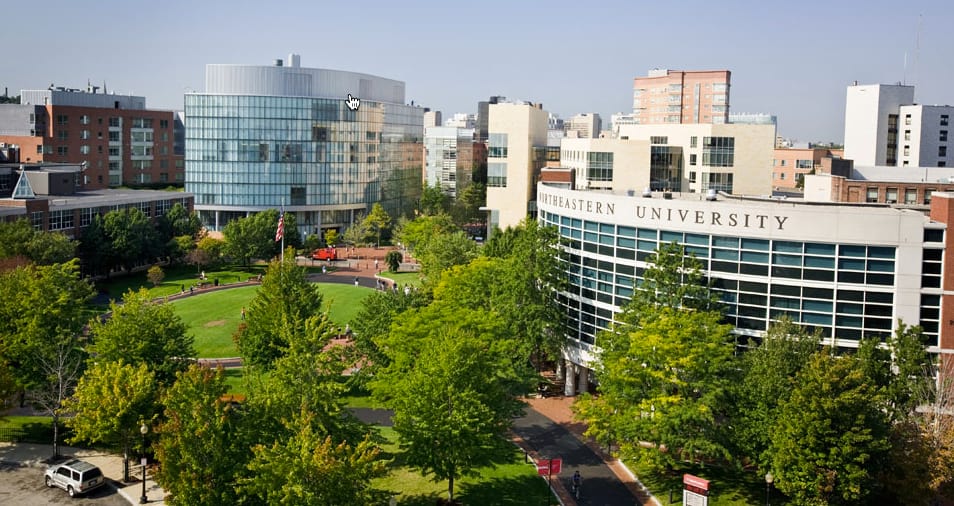
Northeastern University college ranking

One of the universities that worked tirelessly to raise its ranks was Northeastern University. Two decades ago, Northeastern was viewed as a commuter school serving blue-collar students that was saddled with an ugly campus and was of the third tier.

However, a new college president soon took office and became utterly committed to salvaging the organization by doing everything in his power to raise its U.S. News ranking.

There's little doubt that the system encourages gaming, according to the Northeastern president, who was reported as saying this in a Boston Magazine article about this Cinderella story four years ago.

Northeastern, which is currently a very popular destination, is ranked No. 40 in the prestigious national university category by U.S. News. It was ranked No. 162 twenty years ago, and nobody outside of Boston had ever heard of it.

George Washington University's college ranking

Another struggling commuter school, George Washington University, was able to attract wealthy students by cracking the U.S. News college rankings code. These students could afford to pay more for a bachelor's degree, which in turn attracted more well-off youngsters.

Here is a Washington Monthly piece that discusses how ranking manipulation propelled GWU to the top of the list. It is now ranked No. 56 in the category of national universities.

4. Popularity is a big ratings factor.

The U.S. News ranking of a school will be strongly influenced by its reputation among the proper individuals.

Three administrators from the president, provost, and admission offices at each institution in the national university category, for example, are required to evaluate all of their peers on a one-to-five grading scale in yearly surveys. (One is merely minor, while five is exceptional.)

The problem, though, is as follows:

What do the leaders of UCLA, Johns Hopkins, University of Tulsa, and Clemson know about what's happening at Brandeis, Case Western Reserve, Virginia Tech, and Florida State, let alone 300 additional institutions that fall under the national university category?

Or consider colleges that fall under the liberal arts college category but are far less well-known. What information do Beloit and Juniata officials have regarding the caliber of instruction at Lake Forest, Coe, Rhodes, and Allegheny colleges?

Administrators should refuse to rate peers on a scale of one to five since it is an illogical exercise.

5. U. S. News measures six-year graduation rates.

I don’t know any parents who thinks that graduating from college in six years is acceptable. U.S. News, however, uses six-year rates when evaluating schools. Another head scratcher.

6. Rankings encourage colleges to favor affluent students.

Rich students are favored because US News rewards schools that provide higher test scores and grade point averages for their entering freshman cohort.

Wealthy high school students benefit from this selectivity focus because they typically have stronger academic records. These teenagers are more likely to have attended schools with more robust academic programs and can afford pricey test preparation classes. Family income and test scores on standardized tests have a significant positive link.

The school can increase sticker prices without alienating too many prospective consumers by luring wealthier pupils.

7. Rankings encourage the use of merit scholarships.

Prior to the rankings gaining so much attention, wealthy students often had to pay the whole cost of attending college. Most of the funds were set aside for students from middle-class and low-income families who needed financial assistance.

Private and public schools started awarding merit scholarships to recruit brilliant, wealthy students to their campuses rather than those of their rivals as a result of the rankings premium being associated with top students.

How can you come up with the cash to pay for these bargain enticements?

To collect more money for these scholarships, one option is to increase tuition; a second is to decrease financial help for students in need. The majority losers in the rankings game are the low- and middle-income students.

8. Elite schools are the exception to merit awards.

The only universities that don't provide merit scholarships to wealthy applicants are those that occupy the top spots in U.S. News' college rankings.

Rich parents who send their kids to top-ranked universities and liberal arts colleges, like Stanford, Harvard, Princeton, and Amherst, will shell out about $300,000 for a SINGLE bachelor's degree, but they won't do it for other institutions.

Most of these schools admit a pitifully small proportion of low-income students, despite boasting that they reserve their aid for families that need it to send their children to college. Rich pupils are primarily educated at the most exclusive institutions.

9. Rankings encourage admission tricks.

For instance, US News' algorithm favors institutions with a higher student turn-down rate. Schools will pursue students they have no intention of accepting using marketing materials and social media in order to enhance their rejection rates.

Another trick: some institutions make it simple for applicants to submit streamlined online applications, also known as "quick apps" in the business. This tactic is employed by schools to expand their student base and raise their rejection rates.

10. Rankings don’t measure what’s important.

One of the absurd things about the rankings is that producing thoughtful, eloquent young people who can write persuasively and think critically won't move a school up even one point in the rankings. It's odd that U.S. News doesn't even try to gauge the type of learning taking place in classrooms.

The rankings' methodology is actually a set of arbitrary metrics that families and students are intended to use to identify the colleges that are providing the greatest undergraduate education. For determining educational quality, U.S. News uses proxies, although these proxies are at best questionable.

11. Rankings encourage cheating.

Because rankings have become such a high-stakes game, some schools have sent fraudulent information or engaged in unethical behavior. And I have a suspicion that the majority of the institutions distorting their data have never been discovered. Claremont McKenna, the U.S. Naval Academy, Baylor University, and Emory University are some of the institutions that have been revealed.

12. Rankings encourage debt.

The rankings juggernaut's disregard for the amount of student debt accrued in college is extremely vexing. It's a bad oversight, and it's undoubtedly one of the reasons why college costs resist inflation.

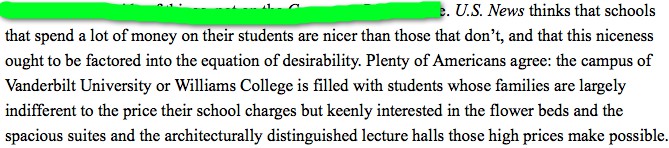
US News recognizes colleges that spend lavishly, and the rankings behemoth is unconcerned if this means raising university tuition and forcing students to graduate with huge debt.

Here is an older post I made about this topic for CBS Moneywatch, my former college blog:

Blaming College Rankings for Runaway College Costs

In 2011, Malcolm Gladwell discussed college rankings in a "fascinating essay for The New Yorker" in which he discussed the motivation for colleges to make their campuses into opulent palaces and pass the cost along to the students:
13. Don’t believe the numbers.

You shouldn't think that a college that is ranked No. 1, No. 19, or No. 73 is superior to peers that are ranked No. 6, No. 42, or No. 95. I've witnessed far too many parents make exorbitant financial sacrifices for their children's attendance at rankings darlings when it was totally unnecessary to do so.

What a pupil does no matter where he or she ends up is more significant than the school that person attends. This fact is demonstrated in a "Post About My Daughter" I wrote four years ago.

14. Use U.S. News as a tip sheet.

Use the U.S. News rankings to come up with concepts rather than just concentrating on the numbers. This will be especially useful when looking for prospective institutions outside the national university category, which comprises almost all of the top universities in the country.

Try exploring for inspiration in the regional universities and liberal arts colleges categories of U.S. News before beginning your investigation.

15. U.S. News is here to stay

During a press conference a few years back, U.S. News editor Brian Kelly pledged the following:  “You can love us or hate us, but we’re not going away.”

Does The Size of Your Child's Class Matter?


A multi-ethnic group of school children are indoors in a classroom. They are wearing casual clothing. They are sitting on the floor and eagerly listening to their teacher read a storybook.

A major benefit of smaller class sizes is students typically receive additional attention.(GETTY IMAGES)

It has long been advocated that smaller class sizes will boost student performance.

Supporters, which include many parents and instructors, contend that smaller classrooms allow for more individualized attention for each student, which boosts test scores, grades, and behavior problems. However, opponents of class-size reduction initiatives contend that such changes just divert funds from other priorities without significantly improving students' academic performance.

“No one’s going to argue against the substantive argument for reducing class sizes, right?” says Douglas Ready, a public policy and education professor at Columbia University in New York. “It sounds great. Teachers want it. Parents want it. Everybody wants it. The issue is paying for it and finding teachers to do it.”

Benefits and Challenges of Smaller Classes

According to Ready, there have been sizable, randomized control trials, which are typically regarded as the gold standard in study design, looking at the impacts of class-size reduction. These research discovered a link between reduced class sizes and higher test scores.

The Student/Teacher Achievement Ratio (STAR) project, a Tennessee experiment, began in 1985. It placed 7,000 kindergarten students in 79 schools in classrooms of varied sizes.

According to a report on the study published in the scholarly journal Teachers College Record, after four years, the students who had been assigned to small courses were between two and five months ahead of their counterparts in bigger classes. The smaller group pupils continued to gain advantages even after the trial was over and the students were placed back in regular classroom settings. They nearly had a full school year on their classmates by the seventh grade.

Then, in 1996, Wisconsin carried out a related study comparing adolescents in classes of 12 to 15 kids with those in classes of 21 to 25 students, with a focus on schools serving low-income students. Again, a federal review of the study found that kids in smaller classes performed better on tests.

“The research is crystal clear that smaller classes lead to better student outcomes in every single way that can be measured,” says Leonie Haimson, executive director of the nonprofit organization Class Size Matters, which promotes smaller class sizes.

However, the outcomes of more recent research utilizing various methodologies have proved conflicting.

For one, reducing class sizes means hiring more teachers, which has long been a challenge for districts, Ready says.

Many of the increases in test scores, according to a study of class-size reduction in New York City public schools from 2009 to 2013, were countered by reductions brought on by the "new teacher effect." According to the paper, class size reduction can "significantly boost student achievement," but only if schools can accomplish it without jeopardizing the caliber of their teachers.

California started a program in 1996 to decrease class sizes by giving districts $650 for each pupil in kindergarten through third-grade classes with 20 or fewer children. Approximately 30,000 new teachers were promptly employed by districts, but the program cost the state billions of dollars.

Inexperienced and uncertified teachers made up a large portion of those educators, according to a report from the Public Policy Institute of California. And in schools with a high percentage of low-income pupils, where nearly 25% of students had a teacher with two years of experience or less and 30% had a teacher who was not fully credentialed, the issue was particularly serious for Black students. Only 12% of white pupils at schools with fewer impoverished students had a teacher with two years or less of experience, and only 5% had a teacher with incomplete credentials.

However, a review of studies on the class size reduction initiative reveals that it “had a positive and significant influence on student achievement,” according to a Princeton University researcher. “Black students seem to have benefited” from class-size reduction “more than any other racial or ethnic group.”

Alternatives to Reducing Class Size

Some education experts contend that raising teacher wages would be a better use of the millions of dollars needed to fund widespread attempts to reduce class sizes, “thus increasing the size (and arguably the quality) of the teacher labor pool,” Ready wrote in a report.

Even while experts dispute reports of a statewide teacher shortage, many school districts have had trouble filling positions because of the pandemic. Federal data show that in January 2022, 44% of public schools reported having at least one vacancy, and 61% attributed the rise in teacher and staff vacancies to the COVID-19 pandemic.

Over the years, fewer individuals have chosen to pursue careers as teachers. According to the American Association of Colleges for Teacher Education, there were more than 200,000 undergraduate education degrees given each year in the 1970s, but less than 90,000 were awarded in 2018.

“We are in a moment of extreme teacher shortage, and it’s likely to get worse,” According to Bryan Hassel, co-president of the education advocacy organization Public Impact. “The idea that we would say now in that environment, ‘You need to find and keep another 25, 30, 40% more teachers,’ is a recipe for disaster because who’s going to fill those slots?”

Instead, states and school districts should try to increase their capacity for small-group tutoring by hiring paraprofessionals, such as teaching assistants, Hassel argues.

“There is strong evidence that having small groups learn from a teacher or a paraprofessional in a tutoring setting is very effective,” Hassel says. “Schools really should be trying to increase the amount of that that goes on, but that can happen in a larger class. You can have 25 kids in a room. Some are working intensively in a tutoring environment with the teacher; the others are doing projects, doing other work.”

What Parents Can Do

Haimson advises parents to talk to political authorities, school board members, and principals about studies showing the advantages of smaller classes.

“Whether you're talking about academic achievement or social, emotional recovery from the pandemic, the best way to ensure that happens for all kids is to be able to offer them small classes,” she says. “We hope that parents will act as their children's advocates and push for that at the local level.”

In the meantime, Ready advises parents to concentrate on teacher quality.

“If a district can afford to have smaller class sizes and maintain teacher quality, great," he says. "But in most parts of the U.S., there are trade-offs."

Ask the instructor or other school personnel if you have questions about your child being in a large class "what plans they have to ensure that kids are getting individual attention even though the class is large, such as small-group work within the large class" or having more paraprofessionals, Hassel says.

"The value of small classes likely comes from the extra attention students get," he notes, "and so there are other ways to get students that attention if you're stuck with a large class."

How to Write a College Essay About Yourself


Your application for the scholarship needs you to submit an essay about yourself. How simple could something be? You have, after all, been residing alone for at least 17 years. You are the only one who truly knows yourself. When you try to start typing on your computer, your mind becomes blank. All of a sudden, everything you know about yourself makes you feel undeserving of a $5,000 scholarship.

What on earth can you write about to pique the scholarship committee's interest sufficiently? Check out our detailed instructions on how to write a college essay on yourself before you start stressing.

Step 1: Brainstorm 

Any scholarship essay prompt should be approached by first doing some thinking. Before you begin writing, we strongly advise that you take some time to consider the essay prompt. In addition to sparking your imagination, doing this will improve the organization and coherence of your essay.

Brainstorm Ideas 

Sit down in a quiet area with a pen and paper to begin brainstorming. Consider your upbringing, your family's financial situation, your academic record, your early years, your education, the sports you participate in, and anything else that contributes to who you are. If you're having trouble starting a discussion, try talking to your parents or friends about yourself. Make notes on the paper about yourself.

Dig Deeper

It's time to go deeper into the information you've provided about yourself. Your scholarship essay should attempt to persuade the scholarship committee that you are deserving of winning by telling a story about yourself. How can you make your own experiences into a gripping narrative? What personal details can you share that will help people know who you are?

It is beneficial to consider your audience. Learn more about the scholarship provider to accomplish this! Read the "about" section on their website. What values do they uphold? What sort of learners do they honor?

How much you had to study to earn your 3.8 GPA would be of interest to your audience. Your GPA and exam results may have aided in your admission to college, but they may not be sufficient to secure you a scholarship. Numerous kids have GPAs that are almost perfect, so writing about it can be a little dry.

Your readers are interested in learning about the difficulties you've encountered or the memorable experiences you've had. Did your parents leave you alone after school every day while they were at work to supervise a younger sibling? Have you ever had mental health issues or learning difficulties that made it difficult for you to study? How did you come to the decision to major in business in college? When we say to dive deep, this is what we mean. go beneath the surface. Discuss your past experiences that led you to your current position. 

Step 2: What to Include in an Essay About Yourself 

Naturally, a scholarship essay on yourself can cover a lot of ground. Your essay can go in a lot of different directions. Keep in mind that you should include facts about yourself in your essay to make it interesting to read. It's okay to include information about yourself in your essay. But you had better add a lot of flavoring to those facts.

Here are some suggestions for your essay.

Topics You Can Address in Your Essay

You can introduce yourself in your essay in a variety of ways. Remember that the subject of your essay must be you and your unique life experiences. You can base your essay on one or more of the following subjects.

  • Experiences that have inspired your degree choice.
  • Challenges you’ve faced that have impacted your life and education.
  • Unique hobbies you have or the sports you play. 
  • How you’ve changed over the years. 
  • Your experiences in school. 
  • Professional goals you have for the future. 
  • Your achievements.
  • Special relationships that have inspired you. If you choose this topic, remember the essay still needs to focus on you.

Your essay should cover a subject that you may relate to your academic or professional objectives. If it didn't have any bearing on your education or profession, it probably isn't pertinent for the scholarship.

Keep in mind that you must discuss both the why and the how. For instance, why are you working toward a legal degree? Why did you take this path to a degree? How might a legal degree benefit your future plans? What life events inspired you to want to practice law?

Step 3: Sketch an Outline

It's time to get organized now that you know what you'll write about. The last thing you should do before beginning to write is to create an outline. Decide on one or two of the subjects we recommended, then start planning out what you'll cover in each paragraph. An introduction, three to five body paragraphs, and a conclusion should make up your essay.

Check out our advice on what to include in your essay and what not to:

Do: 

  • Make an impression right away with your writing.
  • Put yourself in the position of the reader. Are you able to express yourself sufficiently in your essay? Do you persuade the reader that you are deserving of the prize?
  • Make inquiries and learn as much as you can about the company. Make an effort to join their initiatives. Do your interests or objectives align with those of the organization? What benefits can you provide the company?
  • Include only pertinent details. Something is generally useless or inappropriate if it seems so.
  • Since this is about you, write in the first person.
  • Specify your examples. Instead of stating that you suffered during your freshman year, provide examples.
  • Display your abilities and accomplishments.
  • Make sure your essay is engaging. It's not good enough if it doesn't captivate your viewers right away.
  • Edit and proofread your essay. Your scholarship could be lost due to such little spelling errors. They detract from your writing and don't effectively convey your professionalism to the reader. Everyone makes mistakes, but it is your responsibility to proofread your work before submission.
  • Apply the proper format.
  • In your transcripts, describe your academic shortcomings. This is your time to own up to the 'D' you received in math your freshman year. Write about your difficulties with algebra and how obtaining a tutor inspired you to get better. By placing the blame on a teacher, do not in any way use the victim card!
  • It's normal to make mistakes! Write about the lessons you took away from your errors and how they strengthened you.
  • Be genuine and write as you speak (of course, with correct grammar). It's not as amazing as you might think to try to dazzle with thesaurus words.
  • Adhere to the essay's instructions! Even if you write the best essay possible, you run the chance of being disqualified if you don't adhere to the rules.

Don’t: 

  • Falsehood: Making up tales to impress the scholarship committee won't work. Lying screams fakeness. We assure you that scholarship judges can tell when kids are lying because it is so clear.
  • If you believe that boasting about your 4.0 GPA would get you a scholarship, you are mistaken. Show off your assurance without coming across as haughty or conceited.
  • Use the essay as a platform to share your most private family information. This is not the place to sob uncontrollably or reveal private details.
  • Regarding your career aspirations, be vague. Which does it make more sense to reward—a student with clearly defined ambitions or one who has no idea what they want to accomplish with their lives?
  • Reiterate the same information repeatedly. Your readers will start to snore!
  • Apply cliches. Overused cliches are bad! Be brave and original.

Step 4: How to Start an Essay About Yourself 

Your essay on yourself should fascinate readers from the get-go, just like all other scholarship essays should. Write a captivating start to your essay that will entice people to keep reading. Start off by sharing a personal tale or experience.

Also, avoid using quotes and phrases like "from a young age" or "for as long as I can recall." These are not your words; they belong to someone else.

You should include a thesis statement that explains to the reader why you are applying for the scholarship towards the conclusion of your introduction paragraph. They ought to be able to taste your excitement and discern the reasons for your application.

How to Start an Essay About Yourself Example

When it comes to my passion for teaching others, you might say I wasn’t given much of a choice in life. As the older sister of four, it was my responsibility to lead the way and teach my two younger brothers and sister. At least, I assumed that responsibility. I helped them with everything from school projects to packing for camp in the summer. It’s no surprise to me that years later, I have chosen to pursue a bachelor’s degree in Education at the University of Texas in the fall. With this scholarship, I will be able to pursue my degree in education and return to my hometown to teach in a local elementary school after graduating. 

Step 5: What to Include in Your Body Paragraphs  

The bulk of your scholarship essay will be in your body paragraphs. The scholarship readers will learn more about you through this. Each of your body paragraphs should present an argument with details and examples to back it up.

Your goal in these lines is to as fully express your personality as you can. Additionally, you should make a connection between your points and your long-term academic and professional objectives, as well as the scholarship you're asking for. Be careful to explain to the reader how the scholarship will assist you in achieving your objectives.

How to Write a College Essay About Yourself Body Paragraphs Example

My duty as a teacher to my younger brothers and sister was merely the beginning. As soon as I was of legal age, I began babysitting my neighbors on weekends to supplement my income. Sure, I had to give up my weekend nights with friends, but I was able to save a lot of money from my Friday and Saturday night performances. It was never just about the money for me. I enjoyed spending time with the small children. I would plan interesting activities for them, such as "restaurant night," in which we would construct menus and make ice cream sundaes in the kitchen.

I knew I wanted to be a teacher by the time I was in high school. In high school, I attended many subjects that reaffirmed my dream. I especially enjoyed my early childhood education class, where I learned about theories of childhood development, classroom management practices, and curriculum building. I even began to create my own curriculum and forced my younger siblings to attend "school" with me as their teacher. I don't think they were thrilled with all those extra hours of school...

I finished my internship as a teacher's assistant over the last year. Every Tuesday and Thursday, I spent half a day at the local elementary school working with a third-grade teacher. This experience taught me so much, such as how to manage behavioral issues and how to encourage hesitant pupils to engage in lessons. I can't wait to return to my hometown after college and work as a teacher.

Step 6: How to End an Essay About Yourself  

You could be tempted to rush through writing your essay's conclusion paragraph by that point. However, your final paragraph also plays a crucial role in leaving a lasting impression. Take your time with it.

Your essay's final paragraph should summarize its key ideas and bring everything together. The following should be said in your ending clause:

  • To put it another way, restate your point.
  • Give a summary of the points you tried to make in your body paragraphs.
  • Your conclusion paragraph should end with a significant future-focused notion.

How to End an Essay About Yourself Example

You could argue that my childhood shaped who I am today, but I believe it is much more. Without my education and employment throughout high school, I would not have the confidence I have today in myself and my future aspirations. I am really pleased to begin my studies at the University of Texas and continue to build the tools and abilities necessary to become the greatest teacher I can be.

Step 7: The full Example of How to Write a College Essay About Yourself

It's time to put it all together now that you know how to create a strong introduction, conclusion, and body paragraphs. Here is the whole illustration:

When it comes to my desire to teach people, you could say I wasn't given many options in life. It was my obligation as the eldest sister of four to show the way and teach my two younger brothers and sister. At the very least, I accepted that obligation. I assisted them with everything from school projects to packing for summer camp. It comes as no surprise to me that I've decided to pursue a bachelor's degree in education at the University of Texas in the autumn. With this grant, I will be able to complete my education degree and then return to my hometown to teach in a local elementary school.

My duty as a teacher to my younger brothers and sister was merely the beginning. As soon as I was of legal age, I began babysitting my neighbors on weekends to supplement my income. Sure, I had to give up my weekend nights with friends, but I was able to save a lot of money from my Friday and Saturday night performances. It was never just about the money for me. I enjoyed spending time with the small children. I would plan interesting activities for them, such as "restaurant night," in which we would construct menus and make ice cream sundaes in the kitchen.

I knew I wanted to be a teacher by the time I was in high school. In high school, I attended many subjects that reaffirmed my dream. I especially enjoyed my early childhood education class, where I learned about theories of childhood development, classroom management practices, and curriculum building. I even began to create my own curriculum and forced my younger siblings to attend "school" with me as their teacher. I don't think they were thrilled with all those extra hours of school...

I finished my internship as a teacher's assistant over the last year. Every Tuesday and Thursday, I spent half a day at the local elementary school working with a third-grade teacher. This experience taught me so much, such as how to manage behavioral issues and how to encourage hesitant pupils to engage in lessons. I can't wait to return to my hometown after college and work as a teacher.

You could argue that my childhood shaped who I am today, but I believe it is much more. Without my education and employment throughout high school, I would not have the confidence I have today in myself and my future aspirations. I am really pleased to begin my studies at the University of Texas and continue to build the tools and abilities necessary to become the greatest teacher I can be.

Final Thoughts 

You could find the scholarship essay prompt "Tell Us About Yourself" frustrating. It can seem intimidating, but once you know how to approach it, it's really not that bad.

You can succeed if you follow these suggestions. It's time to get writing!

Contact Form

Name Email * Message *

Menu Halaman Statis

Popular Posts

8 Facts About Rebecca Ferguson | Model Kebaya Terbaru | Les Meilleures Pages à Colorier