How-to Tutorials
Showing posts with label Music. Show all posts

How to Add Music to PowerPoint


The kind of slideshow you're making in Microsoft PowerPoint may or may not benefit from the use of music. You can wish to use a lively exuberant music on a slide or a delicate, understated melody all through the presentation.

We'll go over a few alternative methods for adding music to PowerPoint before demonstrating how to use a single song on a slide or play background music continuously.

Upload a song from your computer

Uploading a song from your PC is most likely the simplest approach to include music in your presentation. This song may be one from your playlist or one you've saved and frequently listen to.

Step 1: Open your PowerPoint presentation and select a slide to add the music.

Step 2: Go to the Insert tab and choose the drop-down arrow for Audio on the right side of the ribbon.

Step 3: Pick Audio on my PC, browse for the music file, and select Insert.
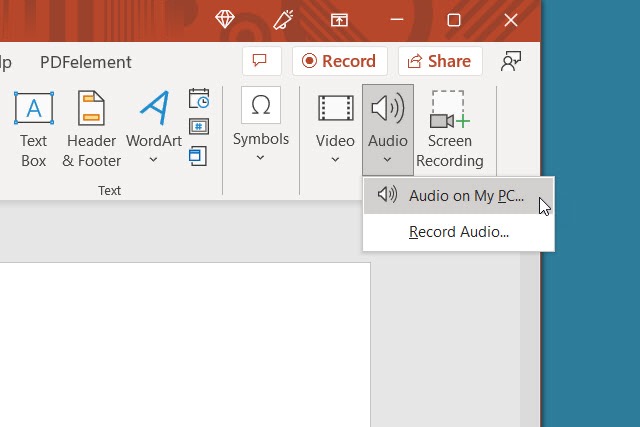
Audio on My PC in the Audio drop-down box in PowerPoint.

Step 4: You’ll then see an audio icon on your slide for the song.

Audio icon on a slide.

Step 5: Use the Play button to listen and the Playback tab to adjust the playback options.

Fesliyan Studios Inc. main page.

Download free music

Perhaps you already know the kind of song you desire, but your computer doesn't contain a copy of it. There are a few web sources where you may get free tracks with no royalties for presentations.

Fesliyan Studios Inc.: Choose a genre at the top such as commercial, happy, sad, or relaxing. Press the Play button to listen, then check out alternate versions where available. Choose Download to get the song.

Chosic: You’ll see a slew of songs for presentations from upbeat to soft. When you hear the song you want, select Download > Free Download.

SoundCloud: If you’re already a SoundCloud listener, this is a good option for presentation music. Type “free downloads” or similar into the search box and review the results. When you find the song you want, select More or the three dots to download the tune.

There are a few ways to download MP3s from YouTube if you can also discover free music there.

Once you've downloaded a music from this list, store it to your device and then upload it to the slideshow as previously mentioned.

Record music while creating the slideshow

You can record a song right in PowerPoint if you're fortunate enough to be musically talented. Make your own presentation music by warming up your voice chords or picking up a guitar.

Step 1: Open your PowerPoint presentation and select a slide to record the music.

Step 2: Go to the Insert tab and choose the drop-down arrow for Audio on the right side of the ribbon.

Step 3: Pick Record audio. Note: You must have either a built-in or external microphone for your computer.
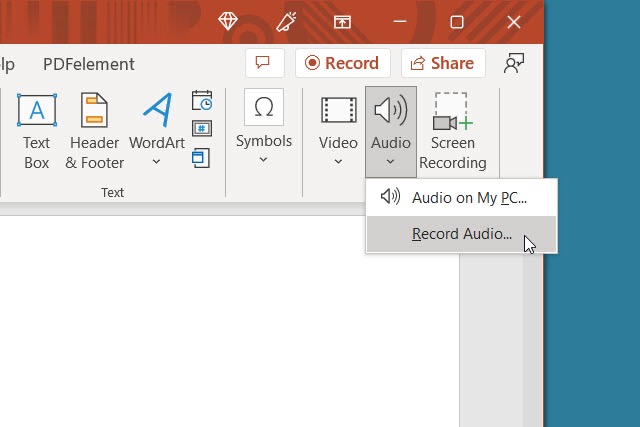
Record Audio in the Audio drop-down box in PowerPoint.

Step 4: When the Record Sound box appears, select the red, round Record button to start recording.
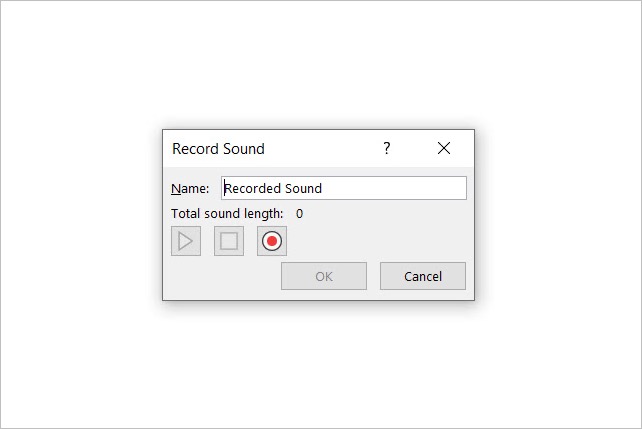
Audio recording dialog box in PowerPoint.

Step 5: Press the square Stop button when you finish. To listen to the recording, press the green Play button.
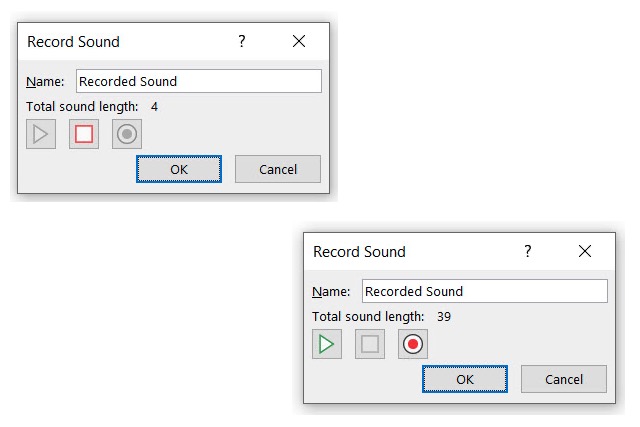
Stop and Play buttons for recorded audio.

Step 6: When you finish, select OK to insert it onto the slide.

Recorded audio on a slide in PowerPoint.

Step 7: You’ll then see the audio icon just like with an inserted audio file. Press the Play button to hear the recording.

Add an offscreen video

Sometimes a video is associated with the perfect song for the circumstance. There is a workaround to include that song in your show even though you can't currently just play the audio and you definitely don't want the video as part of your presentation.

Step 1: Open your PowerPoint presentation and select a slide to add the video.

Step 2: Go to the Insert tab and choose the drop-down arrow for Video on the right side of the ribbon.

Step 3: Pick This DeviceStock Videos, or Online Videos and follow the prompts to insert the video.
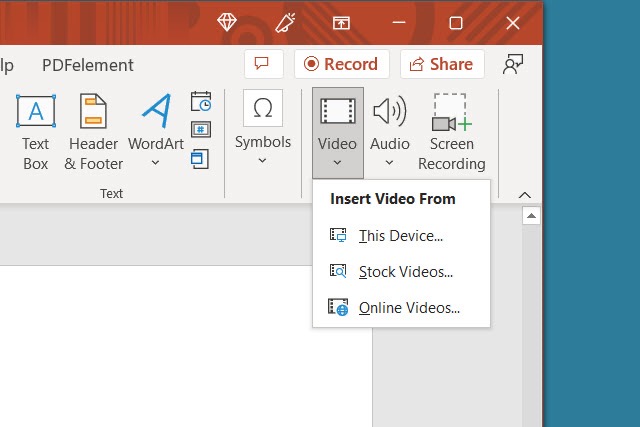
Options in the Video drop-down box in PowerPoint.

Step 4: When the video appears on the slide, drag a corner or edge to make it smaller and then drag it off of the slide to one of the sides.

With this, you can play the video to hear the audio only—you won't be able to view it in your slideshow.

Video resized and moved off the slide.

Step 5: Select the video and use the Playback tab to adjust the options for playing it when clicking the slide or automatically.

Play the song or use as background music

Once you've added the music to PowerPoint, you can decide whether it should play continuously during the presentation or only on one slide.

Step 1: Go to the slide containing the music and select it.

Note: Depending on your preference, you'll probably want the file on the first or second slide if you want the music to play continuously throughout the slideshow.

Step 2: Head to the Playback tab and choose to play the song with the slide or as background music.

Step 3: To play the song only on that slide, choose the Start drop-down box in the Audio options section of the ribbon and pick how you want the music to begin. You can select In click sequenceAutomatically, or When clicked on. When you advance to the next slide, the song stops playing.
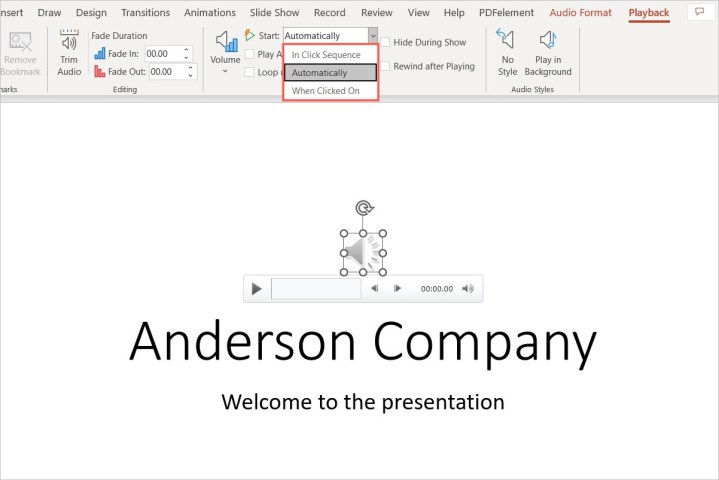
Start actions to play a song on a slide.

Step 4: To play the song throughout the presentation, select Play in background in the Audio styles section. This automatically checks the boxes for Play across slides and Loop until stopped. You can also choose an option in the Start drop-down box for how to begin playing the song.

Remember that the method mentioned before, which uses video files, does not apply here; only audio files do.
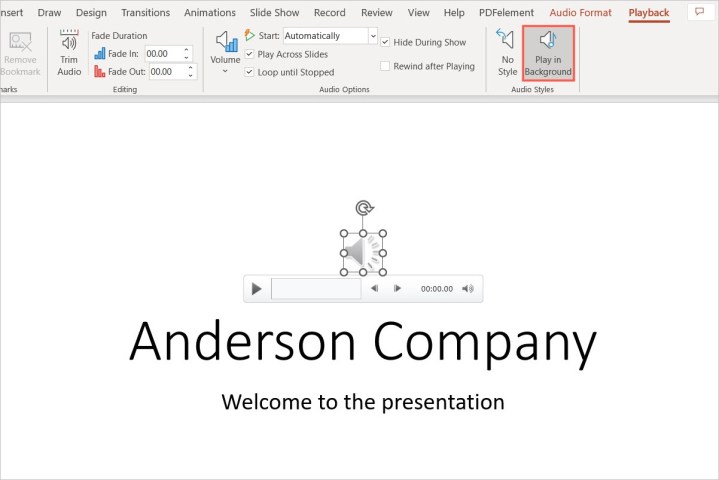
Play in Background button in the PowerPoint ribbon.

Step 5: Adjust any other options on the Playback tab per your preference. You can increase or decrease the volume, rewind the song after it plays, or add a fade in or out effect.

After you've included the music, don't forget to practice your presentation to make sure it sounds the way you want it to. You can also think about including closed captions for hard of hearing people.

How to Listen to Spotify With Friends


What to Know :

  • You can choose a song or podcast episode by using the Spotify app on your smartphone or tablet.
  • To use the Group Session function, tap the Connect symbol in the lower-left corner of the screen.

The steps in this post will help you use Spotify Group Session so that you can collaborate on music with your friends.

How to Make a Listening Party on Spotify

The same playback options will be available to everyone as soon as a Group Session becomes online. Anyone at any time has the ability to play, pause, skip, or add tracks to the queue. Since Group Session is still technically in beta, there isn't a method for a host to lock these settings at the moment, but Spotify will probably add this functionality in the future.

  1. 1. Open the Spotify app on your phone or tablet.

  2. 2. Select a song or podcast episode.

  3. It’s a good idea to pick a song that’s part of a playlist so that you have many options to choose from. Otherwise, you may end up only being able to listen to one song and will have to set up a new Group Session.

  4. 3. Tap the Connect icon in the bottom-left corner of your screen.

  5. 4. Scroll down past your streamable devices and select Start Session under the Start a Group Session option.

    Selecting a song and starting a Group Session on Spotify for Android.
  6. 5. Click Invite Friends.

  7. 6. Select your preferred invite method. You can send a link directly by selecting Copy Linktext, or a messaging app like WhatsApp or Facebook Messenger.

    Finding friends and sending Group Session invite link on Spotify for Android.
  8. 7. To end the Group Session, click the Left-Facing Arrow to return to the Connect screen.

  9. 8. Click End Session.

    Ending a Group Session on Spotify for Android.

What Is Spotify Group Session?

Spotify has options if you don't feel like hanging out with people to watch videos remotely. Up to five Spotify Premium users can join a virtual listening party using the popular music streaming service's Group Sessions feature. Once you and your friends have linked up, you may all listen to any music or podcast on Spotify at the same time.

In May 2020, Spotify debuted the Group Session function. At first, Spotify's co-listening feature was only available to Premium customers in the same area, but eventually connections around the globe were made possible.

Group Session is now restricted to the Spotify mobile app for smartphones and tablets and is only accessible to Spotify Premium subscribers. The desktop apps for Spotify don't have any options at the moment.

How to Add Family Members to Your Apple Music Subscription


One of the top streaming services for all things melodic and melody-related is Apple Music. Spotify's adversary has a lot to adore, with over 72,000 million users and more than 90,000 tunes from top artists.

Apple Music offers a generous three-month trial period of free access to new subscribers. Memberships are invoiced on a monthly ($9) or yearly ($99) cycle after the trial period. Although that is comparable to the typical cost for other music streaming services, it is never a bad idea to save a little money. While Apple Music is available for $5/month to college students, an Apple Music family plan offers further savings on your subscription.

You will learn how to set up Apple's Family Sharing and add people to your account in this article. Before you know it, your entire family will be listening to music together (and helping you pay that Apple Music premium).

You'll need a few things, some of which are more obvious than others, in order to follow the steps in this article. You must first have an Apple ID, which should be available to everyone who has at least one iOS, macOS, or other Apple service. Second, you'll need a Mac running OS X Yosemite or later, or an iOS device running iOS 8 or later.

Of course, you'll also need a Family subscription to Apple Music. If you're starting over with Apple Music, make sure to select a Family subscription rather than an Individual one. It only takes a few steps to convert an Individual Apple Music subscription to a Family subscription, and step-by-step instructions can be found in the support section of the Apple website.

What is Family Sharing?

Family Sharing makes it simple to share material from several Apple services, including movies, iCloud storage, apps, and the service we're concentrating on today, Apple Music. Account administrators can host up to six users under a single family subscription for for $15 per month. Everyone in Family Sharing receives their own preferences and recommendations because they each utilize their own Apple IDs.

The best part is that when you allow purchase sharing with Family Sharing, everyone in the family can swap movies, television series, books, and music—just as long as the user who made the purchase agrees to share with the rest of the group.

Setting up Family Sharing

The Family plan for Apple Music relies on Apple's Family Sharing system rather than operating independently. Go to the next section if you already have Family Sharing configured and you just want to add additional family members. Read on if you've never utilized family sharing and are setting up your family subscription for the first time.

Setting up Family Sharing on iOS

You're in luck if you're reading this on an iPhone or iPad since Family Sharing can be set up right now in just a few easy steps.

  1. Find the Family Sharing settings: Open the Settings app and either tap on your name at the very top, or on older iOS devices, scroll down and open the iCloud settings.
  2. Tap Set Up Family Sharing: Then tap Get Started. From here, follow the prompts until setup is completed.
  3. Invite family members: If you’re using iOS 11 or later, you’ll be invited to choose the first feature you want to turn on for sharing. From here, follow the instructions to invite family members via Messages.

Setting up Family Sharing on Mac

Setting up Family Sharing on a Mac is just as simple—if not simpler—than doing it on an iOS device. There is a slight difference in the procedures.

  1. Open Settings: Click on the ever-present Apple logo in the top left of the screen, then select System Preferences. Once the preferences window is open, click on Family Sharing. For devices running macOS Mojave or earlier, you’ll click iCloud instead of Family Sharing.
  2. Start the setup process: Simply click Set Up Family, then follow the onscreen instructions to complete the process.

Invite family members

Apple Music on a smartphone.

The next step is to add family members so they can enjoy Apple Music as well, regardless of whether you've already set up Family Sharing or just followed the preceding instructions. This is something you can accomplish on an iOS, Android, or Mac device. The following is a list of each step.

iOS

  1. Find the Family Sharing settings: As mentioned above, all you need to do is open the Settings app and tap on your name at the very top, or on older iOS devices, scroll down and open the iCloud settings.
  2. Add a new family member: This is as easy as tapping Add Family Member and entering their name or email address. Then just follow the onscreen instructions.
  3. Finish setup: If you’re using iOS 11 or later, you can choose whether you’d like to invite the family member via Messages or in person.

Mac

  1. Open iCloud settings: Click the Apple icon in the top left of your screen, then open System Preferences and click on iCloud.
  2. Open Family settings: Just click on Manage Family.
  3. Add a new family member: Click the + icon, then follow the onscreen instructions.

Android

  1. Open Apple Music settings: Open Apple Music, then tap the menu icon in the upper left corner.
  2. Navigate to Account settings: Tap on your photo or name at the top of the screen.
  3. Open Membership settings: Tap on Manage Membership, then enter your iCloud password if prompted.
  4. Open Family settings: Tap on either Family or Family Setup.
  5. Add family members: If you tapped Family Setup, follow the onscreen instructions to add family members. If you tapped Family, tap Add Family Member at the bottom of the screen and follow the prompts.

Next steps

You should now be ready on your end. The only thing left to do is for your family to really begin using Apple Music. All they have to do to begin listening is sign into Apple Music using the same credentials they use for Family Sharing. Having said that, occasionally things don't turn out the way you had hoped.

If you run into trouble

Family members that use several accounts frequently log into Apple Music or iCloud (in the case of Family Sharing) with the incorrect one. If someone is having problems logging into Apple Music, that should be the first thing they check.

You or a family member may occasionally be able to access a Family subscription by logging out and back in. First, try signing out and then back in to the impacted Apple Music account. Try performing the same action with all of your Apple services if it doesn't resolve the problem. Try removing everyone from Family Sharing and adding them back if neither of those solutions work. Although this is a little tedious, if you follow the above instructions, it should go quickly.

And that's all there is to it. Check out our list of the top music streaming services if you're thinking about adding another service to provide to your family. We have instructions on how to terminate your Apple Music account in case you decide to switch to a different service.

How to Recover Photos On iPhone Without Backup


Nobody wants to experience the frustrating circumstance of losing images on an iPhone. When it does, there is one thing you should keep in mind: while the photos are not truly lost but rather wait to be overwritten, you should use that iPhone as little as possible or turn it off in order to enhance your chances of retrieving them directly from the device without backup files. Any action that writes to the space, such as adding new images to an iPhone, will permanently wipe any previously deleted photos.

In other words, it's recommended for you to cease using the iPhone right once if you can't locate and recover the photographs from the "Recently Deleted" album in the Photos app. It would be dangerous to carry out the restoration method on iPhone unless you are certain that the images were included within an iCloud backup before deletion.

Recovering iPhone Photos Without Backup Files

Apple primarily offers two offline and online options for data backup and restoration, including photo backup and restoration using iTunes or iCloud. However, if you are now reading this post, it is likely that your search for a way to recover your iPhone's images without a backup file has come up empty. Fortunately, there's still a significant chance that those photographs can be recovered with the iOS Data Recovery third-party file recovery app.

It is essentially a reliable solution for retrieving images and other iPhone information without the need for backup files. It is built with a sophisticated scanning engine that can perform a comprehensive scan of the iPhone's memory and display the files you can recover. Additionally, it offers preview and search features, enabling you to individually or in bulk recover files.

The next tutorial covers the detailed directions for restoring images on iPhone without making backup files earlier. Let's start to see how it gets the job done.

Guide: How to Recover Photos from iPhone without Backup File

Step 1: Connect iPhone to computer

The startup interface will show up once you have installed and launched the application on your computer.

You can only restore lost images from your iPhone's memory if it has no backups. To accomplish this, select "Recover from iOS Device" mode from the menu on the interface's left. Next, get a USB cord and connect your iPhone to the computer using it.


After that is complete, the program will automatically search for your connected iPhone and display its image, name, and current generation on the right pane.

Step 2: Scan the iPhone memory for deleted photos

Choose the data type you want to scan for and recover at this point. In this case, select "Camera Roll," "Photo Stream," and "Photo Library" before clicking the lower-right Scan button to start a deep scan of your iPhone.

Simply wait while the app searches the memory of your iPhone for items; you can see the scan's progress in the display.

When the scan completes, the application offers up an intuitive summary of all sorts of files. Additionally, the numerous categories displayed on the left side help you find the precise files quickly.

Step 3: Choose the deleted photos for recovery

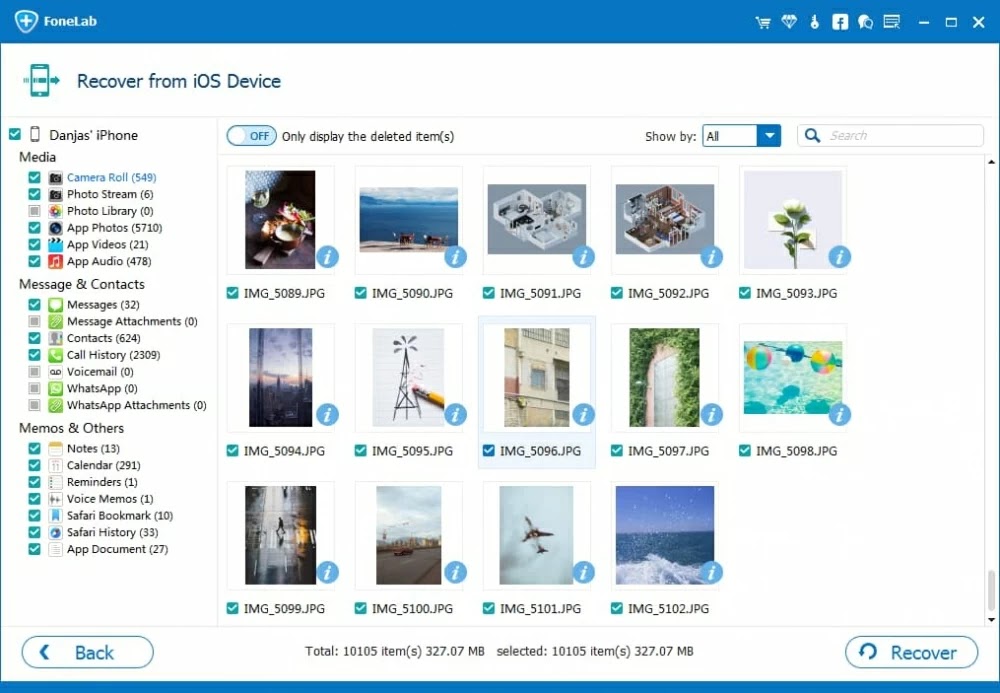
It's time to decide what you want to restore at this point. When you're ready to recover iPhone photos, click here "Camera Roll" category (or "Photo Library", "Photo Stream", "App Photos" category) under "Media" section from the left pane, then look at the repaired photographs on the right pane.

You can flip the "Only display the deleted items (s)" option to ON at the right pane's top if you simply want to look at and recover deleted photos. 

Step 4: Start retrieving photos straight from iPhone without backup file

Once your photos have been chosen, click the Recover button in the lower right corner to bring up a pop-up box where you may choose where to save the recovered photos. On your computer, you can select a different path or just utilize the default output folder.


On order to start the process of recovering your iPhone images, press the Recover button in the pop-up box. Depending on how many photographs you've chosen, this can take some time.

After that, check the photographs by opening the destination folder on your computer.

Restoring Photos from iCloud Backup

It is possible and simple to restore images to your iPhone from an iCloud backup if you have an iPhone backup.

  • Tap on Settings > General > Reset > Erase All Contents and Settings.
  • When you get to the "Apps and Data" screen, tap Restore from iCloud Backup.
  • Enter your Apple ID and password.
  • Select the backup you want to restore photos from.

The process of restoring your images from an iCloud backup should take some time.


Retrieving Pictures from an iTunes Backup

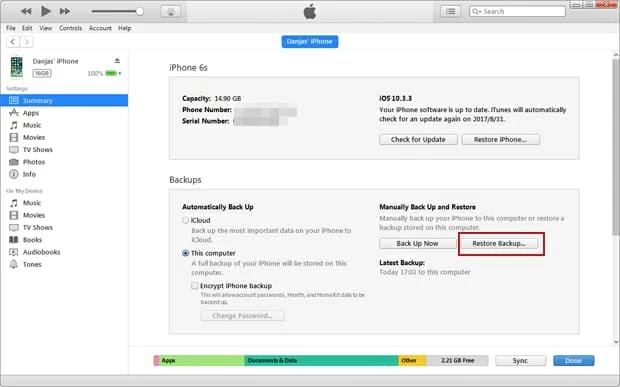
You can connect your iPhone to iTunes and use it to restore images from a backup if you decide to back up your iPhone using iTunes and keep the backups on your computer.

  • Connect your iPhone to your computer and launch iTunes.
  • Click on the device icon when it displays in the iTunes window.
  • Go to Summary tab and select Restore Backup...
  • Select a backup from a list of archives available, click Restore.


Conclusion

Using iOS Data Recovery, you may learn a lot more about restoring images on an iPhone without backup data. The program is generally easy to use and walks you through a successful recovery process. Remember that every Apple customer should backup their iPhone data to prevent data loss.

Contact Form

Name Email * Message *

Menu Halaman Statis

Popular Posts

8 Facts About Rebecca Ferguson | Model Kebaya Terbaru | Les Meilleures Pages à Colorier